Swordheart
I was happy to experience reading another T. Kingfisher fantasy this week. It absolutely suited my mood and kept me entertained throughout. It’s not my absolute favorite of hers, but it’s definitely worth the time.
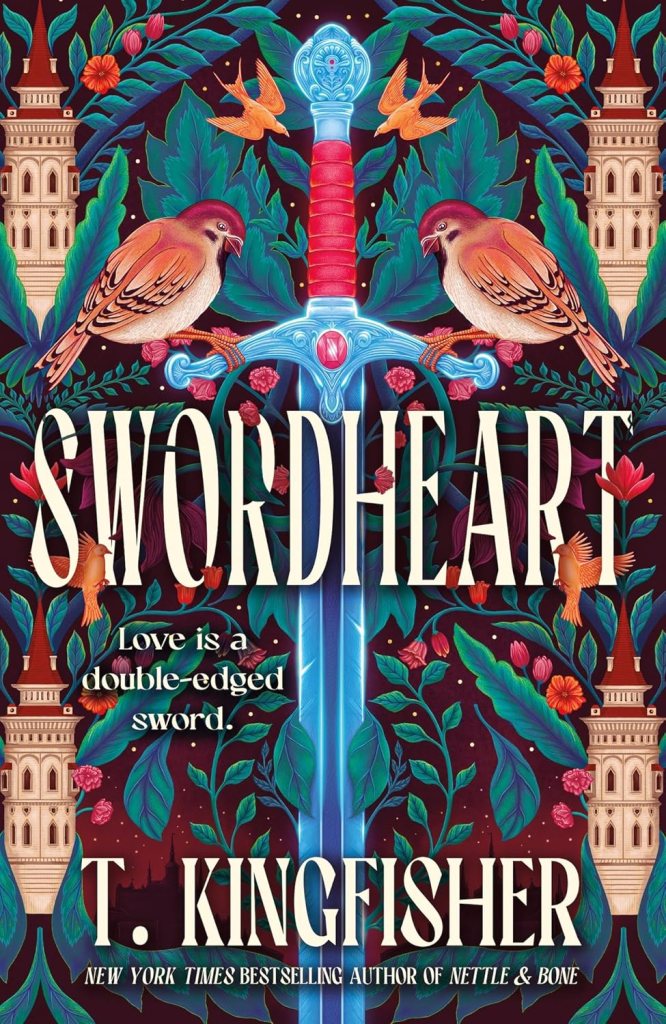
Halla is a self-described respectable widow in her 30s who, after her husband’s death, is left with few resources. She moves in with an elderly uncle-by-marriage, Silas, and cares for him until he, too, expires. She is initially bewildered and also a bit pleased to learn that Silas has left her his entire fortune in his will, but these emotions are short-lived as his obnoxious relatives, led by the forceful Aunt Malva, decide they can’t live with that decision and lock Halla in her bedroom until she agrees to marry Cousin Alver (Malva’s son, clammy hands), to bring the money back into the family.
As she is threatened with permanent imprisonment, commitment to an insane asylum, or forcible marriage, Halla begins to lose hope. But then she discovers that an ancient, dusty sword that hangs above her bed actually contains an immortal warrior who emerges when she draws it from its scabbard. His name is Sarkis, and he is sworn to protect whoever wields the sword. Although he is more accustomed to repelling assassins or fighting battles, he gamely pitches in to save Halla from her in-laws and help her find a way to take back the life she deserves.
This is Kingfisher’s usual blend of great world-building, engaging characters, and good story-telling threaded with humor and romance. I love that her focus is inexorably fixed on compassion and humanity in her characters and in her stories. And I can’t wait to read the sequel (although I may have to give in and buy it, as I am #162 on the library wait-list!).
Not de-Mure
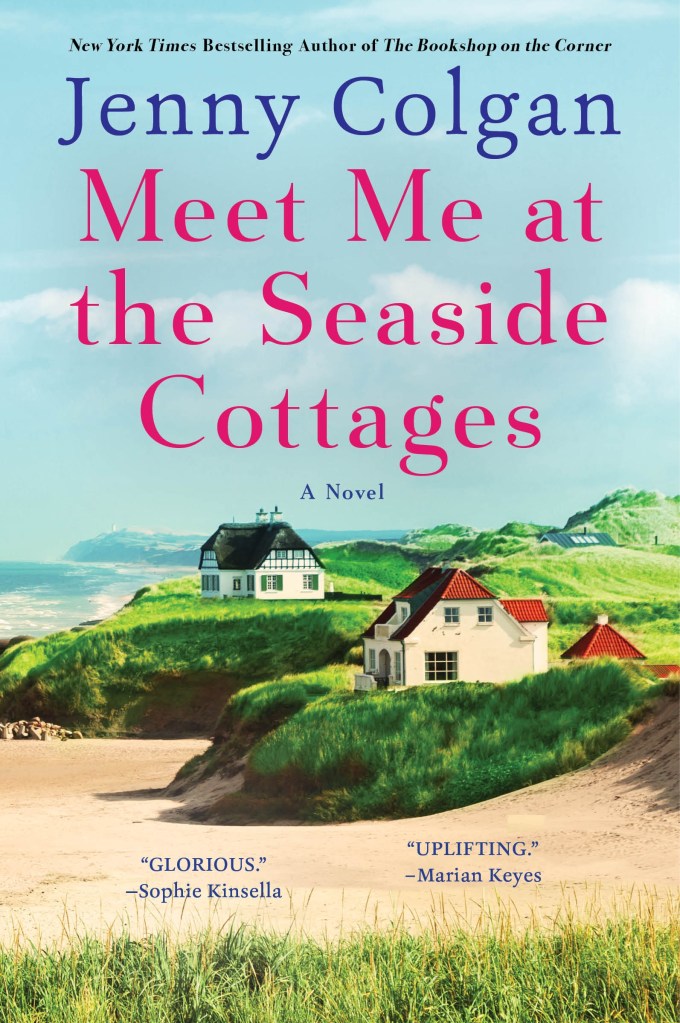
Meet Me at the Seaside Cottages, by Jenny Colgan, is #6 in her series taking place on the fictional island of Mure, located in the North Sea between Scotland and Norway. I have loved most of the books from the second half of Colgan’s career, once she found her optimum writing groove. My comment on that subject a few years ago, when I reviewed one of the earlier books, was, “Read everything after 2012. That seemed to be a turning point for her, when she quit writing about shallow, artificial, unlikeable characters and started embracing her now-trademark touching, empathetic, and charming ones. I’m not saying she went over the sappy line, just that they quit being actively annoying and started exhibiting positive qualities.“
I have to modify that advice after reading this book. Essie, one of the two main characters, is so obnoxious, self-centered, entitled, and completely unlikeable that I had trouble finishing the book despite my fondness for the setting, the other main character, and that character’s romance. The book was neither “glorious” nor “uplifting,” as the author blurbs on the cover claimed; in fact, it was a struggle.
This story, like several others, is set in the small town of Carso, which suffers from “rural flight.” The younger people, unable to find work and therefore also unable to afford a place of their own, have largely moved to the “big city” of Edinburgh or to other more far-flung places, in search of a life with more possibilities. Many of the people who remain live a sometimes precarious existence that is dependent on tourism while disliking some of the changes it brings to their community. One of those is the scarcity of housing, as every available property seems to be snatched up by developers to be turned into holiday homes, excluding the year-round inhabitants from obtaining affordable living space.
One of the main characters, Janey Carter, has managed, after her divorce, to buy and renovate a small cottage where she lives happily alone (although surrounded by a close-knit group of friends), doing her beloved job as an audiologist at the island hospital. There are other nearly identical unoccupied cottages in a row next door to her, and Carso’s occupants have hopes that an ordinance will require that they be developed for sale to the general population, allowing more of them to invest in the town where they wish to remain.
The other main character, Essie, is Janey’s 30-year-old daughter. She fled Carso for Edinburgh just as soon as she could, got a good job in finance, found a picturesque place to live, and met a guy. But now all that has blown up in her face. It starts when her company decides to close their Edinburgh branch and move some of the staff to another office in Europe, but Essie is not invited to come along. She immediately starts looking for a less expensive place to rent, only to discover that her landlady is thrilled with that idea, as she plans to turn Essie’s into an Airbnb and wants her out as soon as possible. And she finds out that although her boyfriend is sticking with her, that doesn’t extend to the option of moving in with him; he lives with a couple of his “bros” from the investment firm where he works, and they’re not keen on another roommate, let alone someone’s girlfriend. Jobs are scarce, and after hunting fruitlessly for awhile, Essie realizes that she needs to retreat to somewhere a lot less expensive until she can solve the employment problem—and that place is home to Mother, in Carso.
The central problem is not that Janey begrudges her daughter the temporary asylum, but that Essie is such a selfish brat. She blamed her mother for her parents’ divorce and, despite 15 years having passed since then, has not changed the opinion she formed in her teens, even though it’s obvious that her father was the person who benefited from the break-up while Janey lost most of what was dear to her. So even though her mother is doing Essie a huge favor by letting her move into Janey’s tiny cottage and basically supporting her through her tough spot (and her father is making no offer of help), Essie gives back a sulky, surly, thoroughly unpleasant response to Janey’s every gesture, and basically acts like that 15-year-old teenager again, taking out all her frustrations on Janey. I couldn’t stand this character from beginning to end, and no amount of ameliorating circumstances made a difference.
Essie is also arrogant and dismissive to most of the other inhabitants of Carso—until she gets involved with the unlikely character of Dwight, the brother of her high school nemesis, who presents as a Scottish cowboy complete with boots and hat. Dwight has bought the option on the other cottages on Janey’s street, and solicits advice from Essie, whose job as a project manager gives her the ability to help him organize their renovation. Dwight is the object of Essie’s ridicule right up until she discovers that she is physically attracted to him. I didn’t buy the abrupt switch for a minute and was also quite taken aback at the rather explicit sex scene enacted by these two characters. Jenny Colgan has always been pretty “cozy” with her writing, and although there have been many romantic relationships in her other books, none of them included this eye-opening degree of frankness. It felt off—abrupt and out of nowhere—and also made me dislike this character even more for her hypocritical attitude.
All in all, nothing about either the environs or the other characters was strong enough to counteract how off-putting I found the Essie character, and I wasn’t a fan of this story.
Road Out of Winter
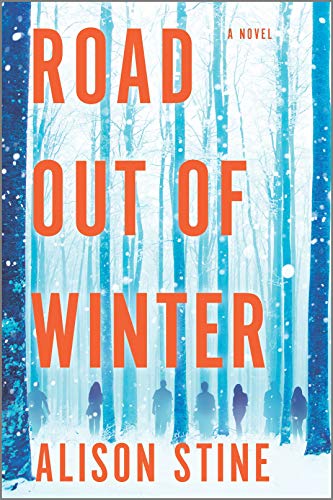
I found this book by Alison Stine on Kindle Unlimited, and I paradoxically love a good dystopian novel, so I decided to give it a chance. I found it both involving and compelling, but missing a few elements that rendered the story somewhat flawed for me.
It’s essentially a fraught road trip to leave behind the eternal winter that has descended on Appalachian Ohio in favor of the ephemeral promise of the west. The main character, Wylodine, is the child of a weak-willed, drug-addicted mother whose life has been dominated by men. Lobo, the latest of these, is a marijuana farmer who grows, processes, and sells the product from the basement beneath their house as well as utilizing the wilder parts of their farmland, and Wil’s childhood and teenage years have been both eclipsed and consumed by living alongside this activity without getting sucked too far in. Two years ago, however, Lobo decided to take Wil’s mom and go to California in pursuit of better chances, but he’s not interested in bringing along his stepdaughter. Also, someone has to stay to be in charge of the farm, to keep the product and the money coming.
Living out in the country as she does, without benefit of internet (Lobo doesn’t approve of it), radio, or even a working telephone, and totally immersed in her labor, Wil hasn’t been truly savvy to the changes happening to the society around her. What she has lately come to realize is that spring and summer have ceased to visit their part of the country. In a place that formerly had distinct seasons, there is now no warming of the ground or sky, no new growth, and even the birds and bugs have gone silent or missing in a seemingly unending winter.
When she finally heads into town, she is shocked to discover how far things have disintegrated: People are lining up for bottled water, propane, canned food, and gasoline, trying desperately to either keep going where they are or pack up to leave in search of warmer weather.
Wil eventually realizes that she, too, needs to go somewhere that her primary skill—the ability to grow things—is still an actual possibility. She inadvertently teams up with a few others in need of help and companionship, but it’s not a simple journey; it seems that each community with whom they come into contact is more desperate than the last.
It’s a powerful story of what happens when the world is suddenly on the brink of a collapse that everyone should have seen coming. People abruptly switch from dealing with the pinch of poverty and cold into full survival mode, and their internal natures come out—some nurturing, others ruthless, with that certain percentage who revert immediately to gleeful savagery and violence.
This is where the story lost the plot a little for me. I had many questions. Things happened too abruptly, and the differences were too extreme. Wil’s lack of information due to her isolation from the world in general and from the internet and social media in particular do work to create a bubble around her that is a stark contrast to what is actually happening; but there is no transition from “normal” to extreme, and it’s jarring. That lack of knowledge is essential to the construction of Wil’s timeline, but the bubble within which she has existed should not extend to the entire world! It seems like everyone in the novel is constantly trying to figure out what’s going on, but at least some of them should have had an awareness of the disintegration that is taking over. In this rapidly changing environment, it seems like information should be among the most valuable of commodities, and yet this author depicts all of her characters as oblivious of the big picture. The crossover from normal to not-normal is a big missing piece of the pie that makes this story less than it could be.
The vividness and immediacy of both the characters themselves and the situations in which they find themselves does partially make up for this plot hole, but too much was left out for there to be a feeling of continuity. The book is open-ended, and I did care enough about Wil and her companions to wish I could know more. There’s no clear indication that there will be a sequel, but perhaps that is in the offing? Anyway, if you like dystopian novels, you will probably enjoy this.
(For those who doubt that anyone would name their kid Wylodine, there was actually a woman who went to my parents’ church—and hailed from the same part of the South—with the same name, only she spelled it Willodean. There are certainly weirder names in the world….)
Effortless reads
I’m not quite sure about that title: I wanted to convey that it is about the reading of books that aren’t literarily complex, that don’t challenge you in any way, but simply present a story that is hopefully enjoyable, fairly light-hearted, and not taxing to read. But I’m not sure that’s strictly true of any book, simply because if it’s too much that way, you may have a compensatory challenge to not be actively irritated by it! I read two such books recently, one more successful than the other at distracting me and not irritating me.
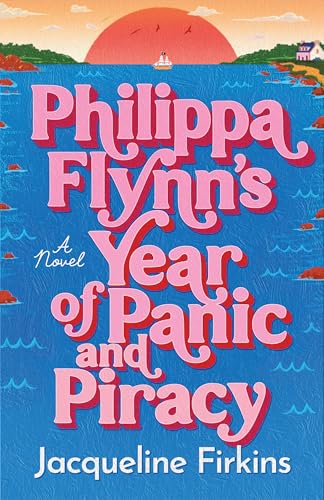
The first, less problematical one, was Philippa Flynn’s Year of Panic and Piracy, by Jacqueline Firkins. I have to confess that it was the word “piracy” that drew me, considering that I have made my way through too many clichéd books (and movies!) about adult children who return to their roots because they A. lost or quit their job, B. got dumped by someone, or C. had some kind of catastrophic loss of income or physical problem from which they need time and space to recover. And “going home” almost always conveniently features a grandmother’s house sitting empty, an aunt who has left an unexpected bequest, or a town that needs (for instance) the big-city fancy-schmancy doctor to change her perspective and become, instead, a beloved general practitioner in a small town. Said book reliably features a house rehab, a rediscovered old boyfriend who has magically become available / appealing, or a meet-cute of someone new who’s not their typical “type” but nonetheless has the pecs and the personality to win them over.
But piracy! that’s more like it. I’m a little sad to say that there’s not any actual piracy in this book, but there is a real ship and a pirate facsimile, and I settled for those. (You should know I am similarly sucked in by anything to do with circuses.)
Philippa has been a college history professor for a while, and has discovered that (at least in her current position) it is a world of misogyny and disappointment. She presents ideas that are rejected, only to see them greeted enthusiastically and implemented when recycled by one of her male colleagues. Promotions and decent office space aren’t forthcoming, and tenure definitely hasn’t been all it was cracked up to be. A brush with a near-death incident (she’s almost swallowed by a giant sinkhole) causes Philippa to re-evaluate her current existence, and what follows is a shucking-off of all her heretofore solemn commitments. Her grandmother, Iris Flynn, a successful novelist who specialized in pirate romances, left her old house at the seaside to Philippa when she died, with the stipulation that her reclusive writing partner be able to live in it as long as the house remained in Philippa’s possession, which he has for some years now. But it’s a big house, it’s her house, and it’s about the only place she can think of where she can retreat and live off little money while considering her options.
What she doesn’t discover until she arrives is that the writing partner is decades younger than her grandmother, and is also the male model who appeared on the cover of Iris Flynn’s saucy novels about a bare-chested swashbuckling pirate king.
There’s a lot more to the story, but I think that sums it up pretty well in terms of expectations. The complications introduced to the plot by things like difficult familial relations, financial awkwardnesses, and the lure of sailing away in an actual masted sea-going ship made it much more entertaining than I expected it to be, and all in all I was pleased with my foray into this genre.
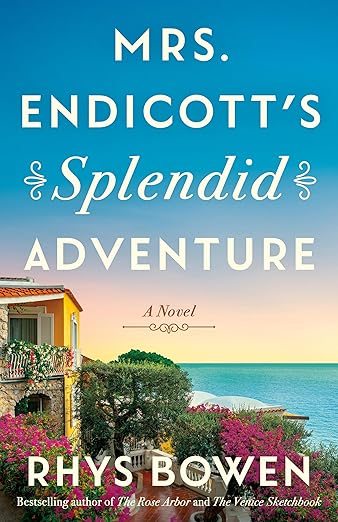
The second book, for which I had higher expectations, actually turned out to be the less successful of the two, at least for me. It was by Rhys Bowen, an author whose books I have read before, mainly from her historical mystery series about Molly Murphy, a young Irish lass who flees her homeland under a cloud and takes up residence in New York City, where she solves mysteries in late nineteenth-century America. This book wasn’t a mystery, although there are a few mysterious sub-plots to be found; it is, rather, historical fiction about World War II, mostly set in the south of France beginning in 1938.
Mrs. Endicott’s Splendid Adventure has a beginning somewhat reminiscent of the 1989 British movie Shirley Valentine, although some of the facts are reversed. Shirley, a working-class woman, is lured away from her mundane life by a spontaneous friend who wins a trip for two to Greece, while Mrs. Endicott, definitely on the business end of upper class, is blindsided by her husband’s request for a divorce and his plan to move her out of their beautiful home and into his former bachelor pad where he had his affair with the pending second wife. Both, however, are fleeing from the gloomy weather and staid British lifestyle, lured by fantasies of a better life in Europe. Mrs. Endicott decides that rather than being relegated to such a humiliating position after a life of catering to her husband’s every need and whim, she will seek out her fantasy. She retains a lawyer to get her a healthy sinecure and settlement, then steals her husband’s Bentley and sets out with her housekeeper, Mavis, who has been on the receiving end of her own husband’s fists too many times, and her elderly acquaintance, Dora, who has an equally compelling reason for departure, for the south of France.
Serendipity plays a large part in determining the three women’s fates, when the Bentley breaks down in a small fishing town without a garage. Their necessarily extended stay, coupled with the rumors of impending war, cause them to decide to settle there, and Mrs. Endicott daringly rents and re-habs an abandoned villa where they hope to weather the war unnoticed. But when the Germans cross the Maginot Line into France, things quickly become more fraught than expected.
I have to say that for about the first half of this book, I enjoyed it more than Philippa Flynn. I identified with the protagonist, both as to the stifling nature of her former existence and the wonderful adventuresome independence she embraced when she let herself imagine a different life. The whole thing has a bit of a Mrs. Harris Goes to Paris vibe that I really liked. I enjoyed the side characters and the adaptations the British women had to make to fit into their new environment. But as the story went along, there were some things that just didn’t work for me.
First of all, the war impinged very lightly on them until two-thirds of the way through, but then as its challenges became more apparent, I felt like Bowen made strange and somewhat unlikely choices for how to include it. And when things did happen, rather than letting the tragedies be a stark contrast with the characters’ former idyllic existence, she made all but one loss temporary and did that thing that I heartily dislike, which is to tie up each and every person’s situation with a big fat bow, until absolutely everything is resolved into a happily-ever-after ending that feels wrong unless it’s attached to an obvious romance novel, which this was not. Don’t get me wrong: I enjoyed the potential of reconciliation with the husband that was portrayed in Shirley Valentine, and the fortuitous meeting of someone who would help her achieve her dream of a Dior dress in Mrs. Harris Goes to Paris; but in both cases, there was some air left in the story. There was room for things to go either way, there were possibilities that took the imagination beyond the last page into the future, whereas in Mrs. Endicott it wrapped up and wrapped up and wrapped up…and ended.
It was by no means a bad book, and I’m sure others might not find the number of faults with it that listed themselves in my head; but the open feel of infinite possibilities with which it began felt shut down by the end and left me disappointed. Go watch Shirley Valentine or the lovely 2022 movie of Mrs. Harris portrayed by Lesley Manville (or read the novel by Paul Gallico) instead.
Upstairs and down
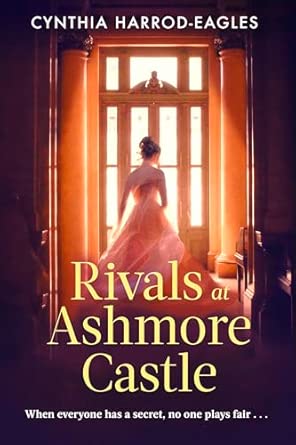
I discovered two weeks ago that there was a brand-new installment of the Ashmore Castle series by Cynthia Harrod-Eagles and, because I had read the last one almost a year ago, decided to reread that one and then the new one. So I have just spent almost two weeks reading The Mistress of Ashmore Castle again, followed by Rivals at Ashmore Castle, also apparently known as The Fortunes of Ashmore Castle? They both have exactly the same plot description—perhaps the name is different in the States than it is in England?
The publishers are going all out to exploit comparisons to Downton Abbey, The Crown, and Bridgerton, but I think the most apropos is the similarity to Upstairs, Downstairs, considering that we get to eavesdrop and spy on the people and the relationships amongst both the “quality” and the servants. And sometimes, of course, there is the scandal of a crossover between those classes.
Harrod-Eagles has done a nice job keeping both personal and historical content going, so that you get a real sense of context from these novels. There is a particular focus, via several characters, on the gradual inroads made by business into upper-class society; a mere 20 or 30 years previous, no one in the titled class would have considered marrying or even befriending a “tradesman,” but as familial wealth declines and business advances, both marriages and forays into new enterprises are undertaken by people from both sides of that divide, and in the process we get to see some of the innovations coming to early 20th-century England in 1905. There are also further glimpses into the women’s suffrage movement and the tentative breaking down of barriers to careers for women, although that’s a fairly small part of this story.
These things are only the backdrop, however, for the continuing soap opera that is the Stainton family, and many changes are made both above and below stairs.
Giles is home from Egypt, chastened by his boneheaded misunderstanding of the feelings of the lovely Italian Julia, and has retreated somewhat reluctantly into the arms of his loving wife, Kitty, and the management of their property and family. Richard, Giles’s younger brother, is still mooning over the impossibility of a relationship with his father’s former mistress, Molly, who has decamped to America to shepherd her daughter’s brilliant career as a concert pianist. But Richard finally decides that he has had enough of the frivolous life (and also of being poor and dependent on his brother) and focuses his energies on creating an innovative new business supplying milk to London with the help of Nina’s husband, Joseph Cowley, the wealthy and good-natured entrepreneur. Nina still struggles with her feelings for Giles but is attempting to channel them into her marriage while dabbling in politics against her husband’s wishes.
Rachel has struggles of her own; she wants to be with Angus (she does! really!), but is also reluctant to give up her social successes and many flirtations for a much less extravagant lifestyle as a tradesman’s wife; luckily, she isn’t free to make that commitment until she turns 21, since her mother is determined to marry her to a nice Russian prince or some such, so as long as she can resist other offers, she can keep partying. Alice, meanwhile, has found an outlet for her passion by focusing on her art, with both positive and negative outcomes. And Sebastian and “Uncle Stuffy” both unexpectedly explore a future with new partners.
Below stairs, Mr. Moss suffers two losses, Afton considers his role, new footman Frederick is perhaps more than he seems, and Dory fearfully contemplates a change of status.
From train crashes to unexpected marriages to forbidden passions, the theme of this latest installment seems to be upheaval. I will definitely continue to read this series with anticipation and enjoyment.
Meanwhile…
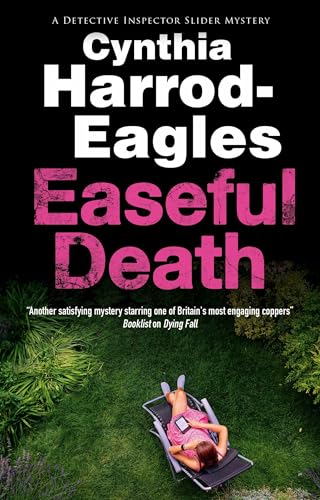
I have needed to play catch-up with Harrod-Eagles’s other series that I have followed for many years, the Bill Slider police procedurals. There were two books I hadn’t yet read, so I picked them up from Kindle Unlimited after I finished the Ashmore books. I read the first one, Easeful Death, then started the second one, Deadly Force, only to realize that what was once gripping now felt somewhat stale. (I have, after all, read 25 of them!) I don’t know whether I have permanently run out of steam on these or whether it’s just a temporary boredom because I wasn’t in the mood for mainstream mystery right now, but I decided to put the second one aside for the moment in favor of a new book I discovered in a reading group; it has something to do with pirates, so it sounded more fun than solving yet another grim murder. I’ll report back soon.
In celebration of dogs
The phrase “the dog days of summer” comes from the ancient Latin phrase diēs caniculārēs, meaning “days of the dog star.” The ancient Greeks and Romans thought that the brilliant light and proximity of Sirius (the brightest star in the night sky and part of the constellation of Canis Major) combined with the Sun’s heat to create stifling weather, droughts, bad luck, and fevers. Modern-day science has proven that Sirius does not radiate extra heat to Earth; the extreme temperatures are, rather, a result of the Earth’s tilt during mid-summer. But I think I’m sticking with the conclusions of the elders, because “dog days” are now eternally identified with the torturous, unbearable heat of August. Whenever anyone uses that phrase, I picture the dusty main street of a town in the Old West, with strays lying in whatever patches of shade they can find, panting from the heat.

All of this is to say, today is NATIONAL DOG DAY! For which that was a rambling and not especially pertinent intro, except for the fact that it’s 100 degrees in MY western town today, and my tongue is also hanging out.
For all of us staying in the shade for the next week who need something to pass the time, here are some titles of books either specifically about a dog or with a prominent canine character.
F I C T I O N

Blue Dog, by Louis De Bernieres
After the death of his father, Mick is sent to live with his Grandpa on a cattle station in the Australian outback, a tough place to grow up. But when Mick discovers a lost puppy in the wreckage of a cyclone, he finds a companion who will share that journey with him. By the author of Corelli’s Mandolin.
Lessons in Chemistry, by Bonnie Garmus
A stray taken in by the scientist-turned-television star, Six-Thirty is a dog who proves two hypotheses: One, dogs have the capability to learn human vocabulary, even if they cannot voice it themselves, and two, humans defy logic. For it is through Six-Thirty’s inquisitive and deeply logical brain that we are offered an insight into what life is like as a Very Good Boy.
Frederica, by Georgette Heyer
Frederica, the protagonist of one of Heyer’s popular Regency romances, ends up in the middle of an unexpected adventure when she takes the family dog out for a walk around Green Park. Lufra, a large, boisterous mongrel, charges the cows grazing there and draws the wrath of several park attendants. Afraid the dog might be impounded, Frederica blurts out that the dog is a pure-bred “Barcelona collie” and belongs to a Marquis who will be extremely angry if his costly canine companion comes to any harm. Unconvinced, the mob traipses over to the Marquis’s residence to sort things out and, luckily, he clocks what’s happening, goes along with the lie, and saves the day.
Seven Perfect Things, by Catherine Ryan Hyde
Thirteen-year-old Abby Hubble rescues a litter of seven puppies dumped in a nearby river in the Sierra Nevada. She can’t bring them home to her volatile father, so she hides them in an abandoned cabin, where she and the puppies are discovered by grieving widower Elliot Colvin. A friendship develops between the two, but it’s threatened when her father wants to move the family hundreds of miles away.

The Friend, by Sigrid Nuñez
A woman unexpectedly loses her lifelong best friend, only to find herself burdened with the dog he has left behind. Her own battle against grief is exacerbated by the suffering of the dog, a Great Dane traumatized by the unexplainable disappearance of its master. The woman refuses to be parted from the dog, even though dogs are forbidden in her apartment building, and the book uses this pairing to explore the themes of death, writing, and relationships. The National Book Award winner for 2018.
Dog On It (Chet & Bernie Mystery #1), by Spencer Quinn
A series told from the POV of the dog, Chet. If Chet doesn’t see/hear/smell it, neither do we. And Chet gets distracted easily (Squirrel!), which parenthetically saves us from a lot of unnecessary tedious details. Chet is intensely loyal to down-on-his-luck private investigator Bernie, and puts his extraordinary nose to good use in helping Bernie solve mysteries. This first book led to 15 more, plus some interim short stories.
Dog Days, by Ericka Waller
Three strangers’ lives unravel and intersect as they discover what fate has in store for them with their dogs by their sides.
The Dog I Loved, by Susan Wilson (who has written several other dog-themed books)
Two women—a former criminal and a disabled war veteran—navigate paths towards independence aided by two dogs.
“The average dog is
ANDY ROONEY
a nicer person than the average person.”
N O N F I C T I O N / M E M O I R

Off the Leash: A Year at the Dog Park, by Matthew Gilbert
A group portrait of dog people, specifically the strange, wonderful, neurotic, and eccentric dog people who gather at Amory Park, near Boston’s Fenway Park.
Oogy: The Dog Only A Family Could Love, by Larry Levin
At the animal hospital to have their beloved but terminally ill cat put to sleep, Levin and his twin sons, Dan and Noah (themselves adopted), discover the ugliest dog they had ever seen (he had been used as bait for fighting dogs when only a puppy). The dog seemed determined to belong to them, so they took him home and called him Oogy (an affectionate version of “ugly”).
E. B. White On Dogs, edited by Martha White
The best and funniest of the Charlotte’s Web author’s essays, poems, letters, and sketches depicting over a dozen of White’s various canine companions.
F O R C H I L D R E N

Pig the Pug, by Aaron Blabey (picture book series)
Pig is the greediest Pug in the world. He is ill-tempered, rude and unreasonable, and does not want to share his toys!
Good Dog, Carl, by Alexandra Day (picture book for young children)
The first in a series about the babysitting Rottweiler. The first has notably sparse text, but sequels such as Carl’s Summer Vacation and Carl’s Snowy Afternoon are more elaborate.
Chester and Gus, by Cammie McGovern (middle school)
Chester flunks out of service dog school (he is not calm when there are loud noises), but then he is adopted by a family for their son Gus, a nonverbal autistic boy. Told from the dog’s viewpoint, who struggles to figure out how best to help his person.

If this list doesn’t offer what you seek, I have featured a similar column for several years, and you can still access those, as well as some individual longer reviews about dog-related fiction:
https://bookadept.com/2025/08/26/best-in-show/
https://bookadept.com/2020/08/26/the-dog-days-of-summer
https://bookadept.com/2024/08/26/dog-day-afternoon/
https://bookadept.com/2021/10/14/a-boy-and-his-dog/
https://bookadept.com/2021/09/05/coming-of-age-w-dogs/
It’s International Cat Day!

Let’s talk about some titles with cats as their theme!

MILLIONS OF CATS,
by Wanda Gág
This is considered the first American modern picture book. Before 1928, most picture books in the United States were imported from Europe or relied on standard separated text and static art. Millions of Cats was one of the first books to use double-page spreads where the art flows across both pages to tell the story. It won a Newbery Honor in 1929. It’s the story of an old man and an old woman who were very lonely and decided to get a cat. But when the old man went out searching, he found not one cat, but millions and billions and trillions of cats! Unable to decide which one would be the best pet, he brought them all home.

SIMON’S CAT,
by Simon Tofield
This artist started out publishing his animations about he and his demanding cat online, mostly on YouTube, and the book came afterwards. The cat’s daily escapades accentuate the hilarious and typical behavior of cats everywhere.

THE CAT WHO COULD READ BACKWARDS, by Lillian Jackson Braun
This is the first in Braun’s series of “The Cat Who…” cozy mysteries. She wrote the first in 1966, penned a couple more, and then wrote hardcore crime fiction for 18 years before returning to fill out this series; she ended up writing 29 of them. One reviewer on Goodreads says, “I have never seen a cat-themed novel depict a human / feline relationship better than Lillian’s do.” The characters and writing are quirky, the mysteries are offbeat, and it’s a good cup-of-tea rainy-day read.
POETRY FOR CATS: The Definitive Anthology of Distinguished Feline Verse, by Henry Beard
What if famous poets’ cats also wrote poetry? Pretty funny if you are not familiar with the original works but even better if you are.
I situate myself, and seat myself,
And where you recline I shall recline,
For every armchair belonging to you as good as belongs to me…
—Walt Whitman’s cat
If you can disappear when all about you / Are madly searching for you everywhere, / And then just when they start to leave without you, / Turn up as if you always were right there; / If you can shed your hair in any season, / And cough up half of all that you devour, / And rush from room to room without a reason, / Then sit and stare at nothing for an hour…
—Rudyard Kipling’s cat
Do not go peaceable to that damn vet, / A cat can always tell a trip is due, / Hide, hide, when your appointment time is set.
—Dylan Thomas’s cat

Just a few to get you started—you can find thousands more in the “lists” category on Goodreads!
https://www.goodreads.com/list/show/5848.Cat_Lovers_List
Stepmother, reimagined
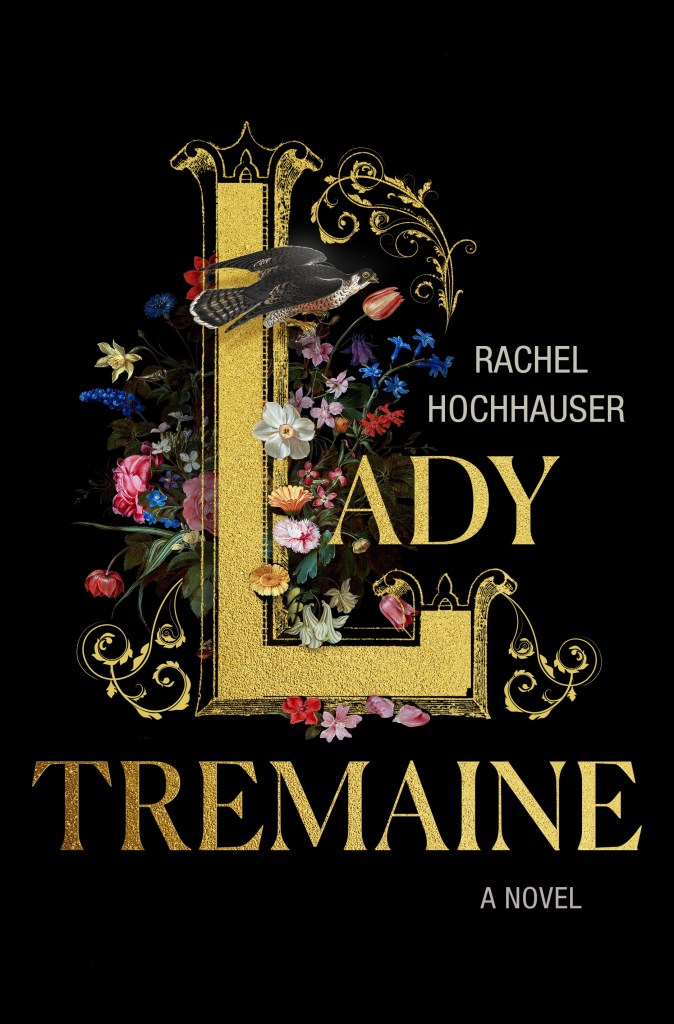
I just finished reading Lady Tremaine, a debut novel by Rachel Hochhauser that reimagines the Cinderella story. But honestly, this is less the story of Cinderella (her stepdaughter Elin) than it is of the protagonist, Ethelreda the stepmother.
It’s kind of a weird one, and for that I liked it. I always enjoy it when someone does a thorough job of turning a fairy tale on its head—witness my enthusiastic reviews of the books of T. Kingfisher who, in some cases, renders them well near unrecognizable. In this case, the poor downtrodden Cinderella is, instead, a classic example of privilege, existing in her own little fantasy world of “proper” womanliness while rejecting the stepmother whose efforts put food on her table, and the stepsisters who likewise labor for the family’s comfort.
In this version, Cinderella’s/Elin’s father has died and has left his estate in a form impossible to maintain: The house and grounds do go to his second wife, Ethel, but all the money has been left as a dowry for his daughter, unable to be broached or to be used for anything save as a bribe for a future husband. So the mother and her two natural and one stepdaughter are left in a drafty, decaying hall with no means of supporting themselves or its upkeep. Over the course of a decade or so, they sell off everything valuable (jewelry, silver, sculptures, furniture, portraits, picture frames) from the house while struggling to maintain the façade of respectability, hoping for marriages for the girls. They are assisted by two stalwart elderly servants with nowhere to go, who stay for love and a roof over their heads and labor alongside Ethel and her two daughters—sewing, picking the apples from their extensive orchards to sell at the village farmers’ market, and learning to do what it takes to survive with no money and few resources. While the five women do this, Elin sits in her turret room reading etiquette books and refusing to expose her pale skin to the sun or her delicate hands to the harshness of work.
While it’s an interesting take, it’s a little hard to go with it, perhaps because we are so accustomed to the idea of the stepmother as the villain and the poor child as the innocent victim redeemed by true love. There is a crucial element missing…until we meet the prince, and the queen, and another key member of the court. Then roles move around once again and dilemmas receive more clarity of purpose. I don’t want to say more than that and spoil the story, so I will just say that it is worth reading for the imagination involved to create it, and for some of its resulting themes.
“A prince without a retinue
otto, lady tremaine
is just a man with bad manners.”
The writing was evocative, although there were some careless mistakes in grammar and construction that could have been resolved by a more thorough editing. The character building was a little spotty, so that some figures were well-rounded and others too ephemeral. But…it was a debut novel and as such gives room for improvement, with good prospects, I would say, for its author if she can come up with something this creative.
Having said all that, I would refer you to the Kingfisher novels if you want this level of originality but with much superior exposition.
Mad Mabel
I was really looking forward to a new Sally Hepworth novel. Although I have felt lukewarm about a couple of her titles, I liked The Good Sister well enough to read it twice, and so many people raved about this one. But it turned out to be one of those books that I liked more right after I turned the last page than I did on later reflection, and since I left writing this review for a couple of days after finishing, my initial reaction has cooled with a more analytical frame of mind. I ended up feeling a bit disappointed with it. It’s not a bad book, but there are issues, for me, that kept it from a truly high rating.

Hepworth’s books are often promoted as mystery or suspense, but that description seems to me to be misleading and may be the source of some people’s disappointment with this book in particular. It’s true that she writes about people’s interpersonal drama and accentuates key moments that are major turning points, but the creation of the suspense here comes more from the construction of the timeline and its revelations than it does from true tension, and the “big reveals” ultimately fell flat. The whole “Mad Mabel the murderer” notoriety was built on one truth buried by a lot of rumor and supposition that didn’t turn out to be so dramatic as the build-up would indicate, and all the back-and-forthing to get there became tedious.
As for the set-up—the story’s key elements seemed stale to me. The curmudgeonly oldster with the secret soft spot for [fill in the blank] feels so overdone. I mean, stop to name a few others in this vein: A. J. Fikry. That guy called Ove. Even Vera Wong qualifies. The Elegance of the Hedgehog is a quintessential story about a cranky old person and a young child crafting an unlikely friendship, but there are also Arthur Trulov and Maddie, Frank and Red, and Joseph and Mrs. F. And yeah, Ove again. Even the bit about the old person supposedly disliking animals but adopting one nonetheless when no one else wants it (and then secretly falling for it) has become a cliché.
Finally, some of the character-building felt decidedly lacking. I mean, the evil villains—that’s how they were painted, but the explanations were surface or nonexistent, they just were. The police officers were caricatures. Some of the neighborhood people who were supposedly instrumental remained cardboard cutouts until so late in the story that I didn’t care any longer. There just didn’t seem to be enough justification for some of the interactions in this story. The best character for me was the child, Persephone, who was written with all the ebullience and spontaneity of a real seven-year-old and maintained her fresh appeal throughout.
Maybe the fault lies not with the book but with this cantankerous reader. I gave it four stars out of five when I finished it, then downgraded to three a couple of days later. Perhaps reading it after thoroughly enjoying the originality of Kingfisher’s Thornhedge did it a disservice by comparison. Who knows? At any rate, it gets top marks from about 90 percent of its readers, so don’t let me stop you—draw your own conclusions.
One P.S.—what is up with that cover? Mabel is in her 80s. Most of the pertinent action happens either when she is a young child, a teenager of 14-17, or an elderly woman, so why on earth is there a 35-year-old on the cover?
At the base of the tower
I have previously spoken here of how delightful I find the fantasy tales of T. Kingfisher. While she does write completely original stories (as well as some that are more horror than fantasy), many of her books are retellings of traditional fairy tales. The thing that sets her apart is the whimsy and originality with which she manages this. I have read many fairy tale retellings, mostly because that became an exceedingly popular format in young adult fiction while I was still the purchasing librarian for the YA book collection at the library where I worked. I was often disappointed at the lack of innovation and also the tendency towards “romantasy” that many of their authors chose, so when I discovered T. Kingfisher, I was taken with her unorthodox approaches, some of which make the generative fairy tale all but unrecognizable but always give good value to the story.
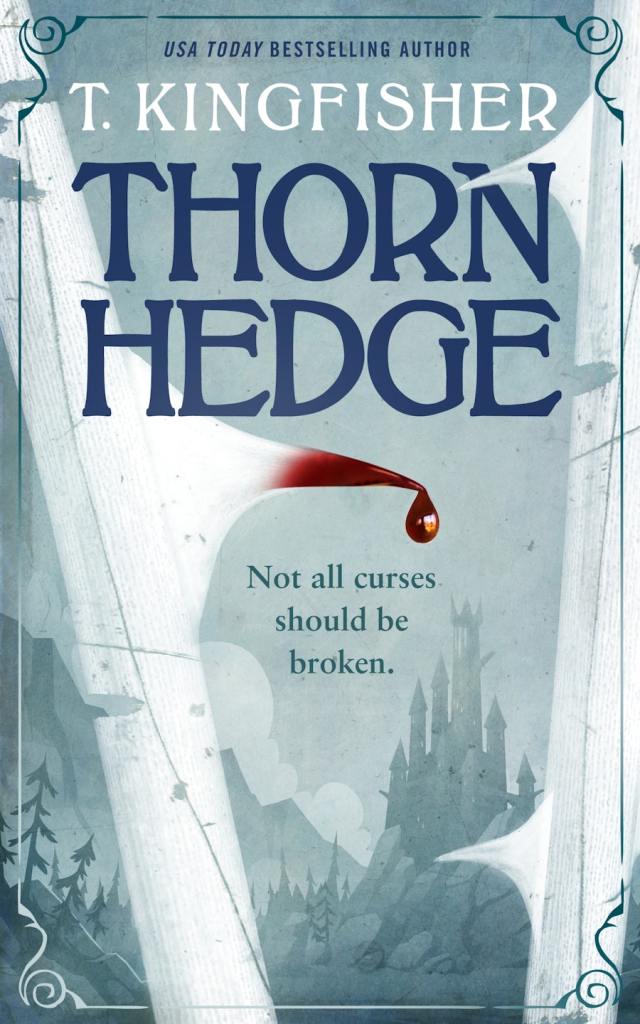
The most recent one I read was Thornhedge, which is based on the stories of Rapunzel, sequestered in a tower, and of Sleeping Beauty, whose slumbering kingdom is surrounded by a well-nigh impassable hedge of thorns and brambles.
In the legend of Rapunzel, a pregnant woman craves a rare salad green (rapunzel, or rampion), and her husband steals some from the garden of a powerful witch. As revenge, the witch takes the baby (or in some versions the father sells the baby to the witch), and locks her in a doorless tower hidden deep in the forest. We all know the story of how Rapunzel’s hair grows long enough that the witch can climb up her braid to visit her. One day a wandering prince hears her singing and pretends to be the witch to get her to let down her braid. He ascends, the two fall in love and that’s where the Disney version stops; the Grimm’s fairy tale has a much darker ending, with banishment, blindness, and eventual reconciliation of the lovers.
Charles Perrault was responsible for promoting the basic Sleeping Beauty tale of a wicked fairy’s curse that ultimately sends a princess and her kingdom to sleep for 100 years. The castle is surrounded by a protective hedge, and a prince breaks through the hedge to awaken the beautiful princess with a kiss.
Kingfisher had just completed a Sleeping Beauty-related book for children (featuring hamsters instead of people), and her mind continued to toy with themes after she was done. What she thought about was, What if the princess was locked in a doorless tower inside a daunting hedge not to protect her but to protect everyone else from her? and Thornhedge started writing itself. To continue that line of thought, what if the fairy sent to bless the child was inept or distracted and didn’t deliver the correct wording, so that in defense of humanity she had then to remain close at hand to make sure that no well-meaning romantic king’s son hacked through the hedge and broke down the wall of the tower to get to the princess, who, once awakened, would eat him for lunch and then go on a rampage from which no one could defend themselves?
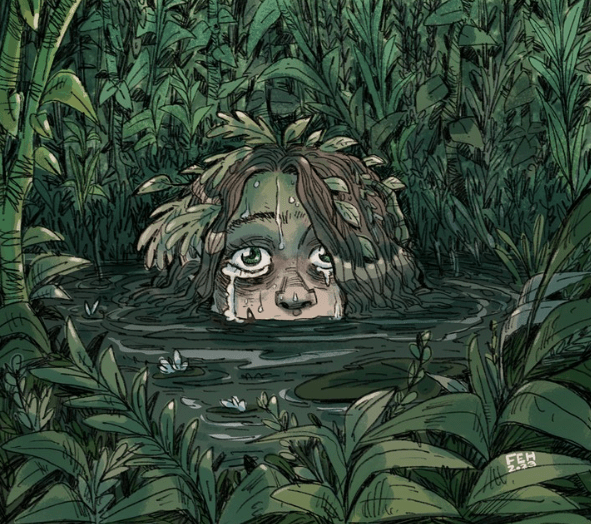
In Kingfisher’s version, the guardian is Toadling, a homely woman who can transform into a handsome toad. She has her own complicated back story that I won’t go into here, because it is hard to explain but also because it’s best read for itself; and that story connects her with her charge, the sleeping princess, and makes her responsible for preserving the spells, wards, and physical deterrents that keep the princess quiescent. But many years after she’s thinking that it’s finally safe to let down her guard, since everyone who would have the slightest memory of the tower or its inhabitant is long dead to the third generation or beyond, a wandering knight happens upon Toadling and her charge and Toadling must decide what it is incumbent upon her to do to fulfill her charge.
The magic was concentrated near the top of the remains of the tower, but she could feel it from here. It was like stepping into a warm rain. Individual droplets of magic beaded invisibly against her skin,
TOADLING, THORNHEDGE, T. KINGFISHER
and she brushed them away with her hands.
It was her own magic, but it had been separated from her for so long that it felt unfamiliar, like returning to a childhood nursery when one was grown.
This is a novella, being only 116 pages—but the story, the characterizations, and the world-building are worthy of a book five times the size. Kingfisher really knows how to create a mood, a personality, an atmosphere, and if you enjoy a twisted fairy tale, do seek this one out.


